

workshop design & facilitation
better CONVERSATIONS and real results
We design creative, interactive processes that produce meaningful outcomes. Our work enables people from all walks of life to collaborate effectively and achieve shared goals.
We are skilled in a huge variety of techniques and methods including deliberative processes and have extensive experience in facilitating meetings with high levels of emotion and outrage.
We tailor every session to the issue we are addressing, the outputs being sought and the participants we are working with.
This ensures your return on investment is high and that the time allocated is used as effectively as possible.
We can facilitate a conversation built around any purpose. Some examples include:
strategic planning and review
engagement through change management processes
sensemaking workshops (to test, review and consolidate engagement data)
conflict, polarised viewpoints or an issue that is ‘stuck’
our iMPACT
The value we bring:
independence and quality built on strong principles
accessibility, inclusivity and ability to work with people from all walks of life in online, in-person and hybrid formats
collaboration between diverse groups and sharing of divergent perspectives
outputs aligned to your agreed success measures and needs
clear, useful reports that provide a transparent record of data and outputs.
workshops can HElp to solve:
Group tension, stuck conversations, no shared direction, lack of ownership or buy-in, realms of data to wade through and interpret, poor performance and much more ... have a problem? We can probably build workshops that solve it!

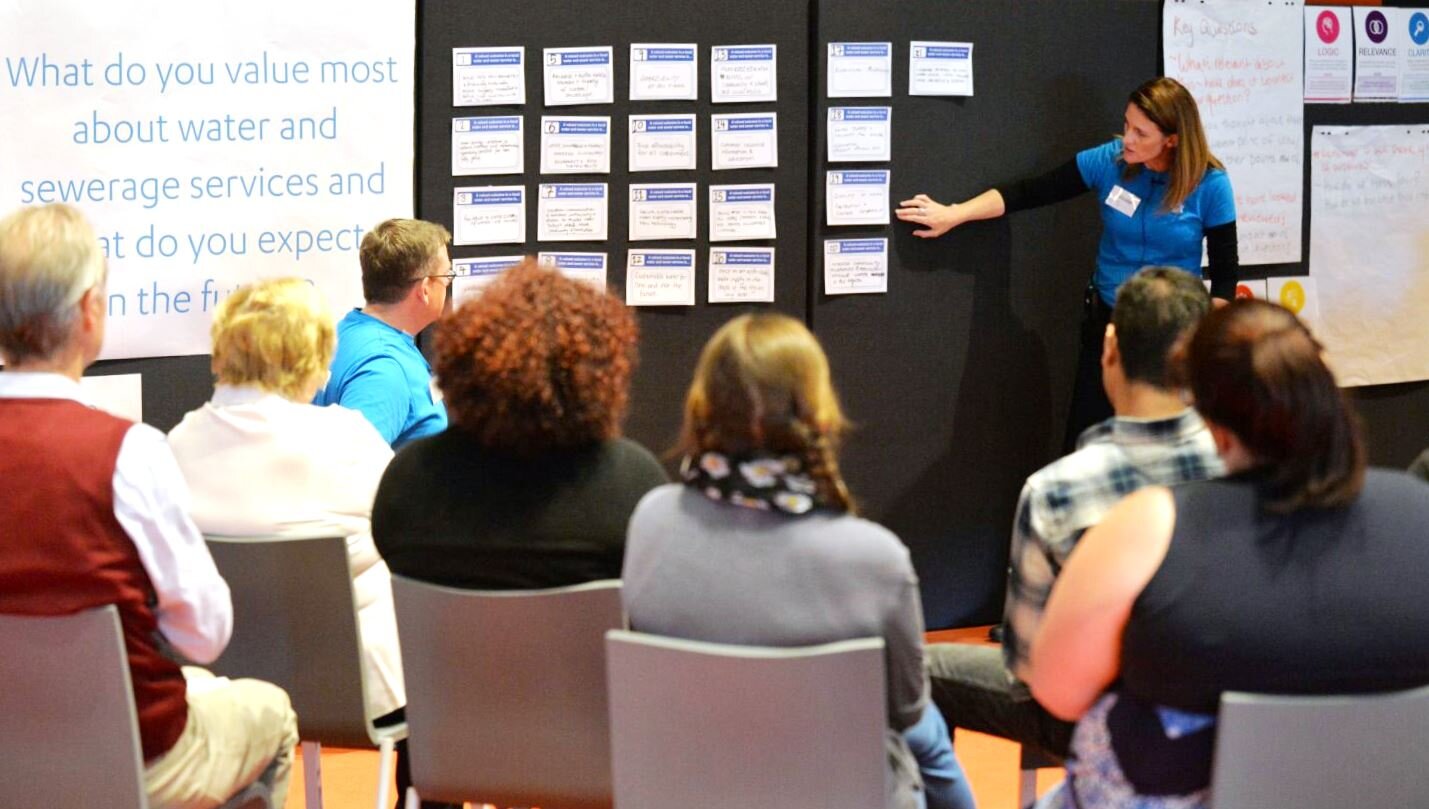
collectively, our team has hundreds of years of facilitation experience. we’re known for our principled approach that balances best-practice with industry-leading innovation.


WHAT FACILITATORS do (AND DON’T DO)
Good facilitators focus on supporting the group’s discussions/work in order to deliver outputs with impact.
We are not emcees, moderators or chairs. We don’t entertain the audience, ‘manage’ people or influence the conversation. Instead, facilitators are the glue that enable a collaborative, shared, productive conversation to take place.
The wisdom we are seeking is within the group itself, and we work to draw out diverse perspectives, ensure every participant has an opportunity to be heard, and enhance the quality of the conversation around the problem at hand.
WHEN DO I NEED A FACILITATOR?
Some of the reasons you might need a facilitator include:
you want a neutral or unbiased person to guide the discussion (to build trust, ensure balance or maintain independence),
you want the process to meet objectives and deliver tangible outputs,
you want participants to have an equal voice, or you want diverse perspectives to be drawn out,
you’re working in an environment of distrust, outrage, conflict or emotion,
you want people to come to a shared, collaborative decision,
you’re grappling with a difficult or ‘sticky’ problem or decision,
you simply want your meeting to be more focused, productive and effective.

“Facilitators are called upon to fill an impartial role in helping groups become more effective. We act as process guides to create a balance between participation and results.” ”
our role as facilitators
When working with a group, a facilitator takes on a number of critical roles including:
To be a process guide: To provide an overall road map and detailed process tools and activities that support participants to do their work. This means helping them to understand their task, engage with each other on the content and to achieve session objectives together.
To create the right environment for deliberation: To provide the tools and techniques that allow people to consider a range of information, identify options, weigh up the pros and cons of options and make choices between options.
To be neutral: To be concerned only for the process and not to have any stake or interest in the content or the outcome.
To manage group dynamics: This means ensuring all participants feel they are able to fully participate i.e. to speak and be heard by others.
To be flexible and responsive: To respond and adapt to the group's needs as expressed through cues (verbal, written, observed) in workshops.
And to stay on time!

OUR PRINCIPLES
Whether we’re working with participants in a face-to-face or online format, the principles of good facilitation remain the same.
We work to a set of principles drawn from the fields of participation practice, deliberative democracy and facilitation. Learn more.
WE SET OUR STANDARDS HIGH
We are members of the International Association of Facilitators (IAF), the Australasian Facilitators Network (AFN) and the International Association of Public Participation (IAP2).